When you obscure the face, you liberate the truth.
Throughout history, the tradition of the Venetian masquerade has captivated those who understand that total visibility is often a trap. In a society obsessed with cataloging, labeling, and exposing every facet of individual identity, wearing a mask is an act of profound rebellion. It offers a rare, intoxicating kind of freedom—the power to observe without being consumed, and to exist purely on your own terms.
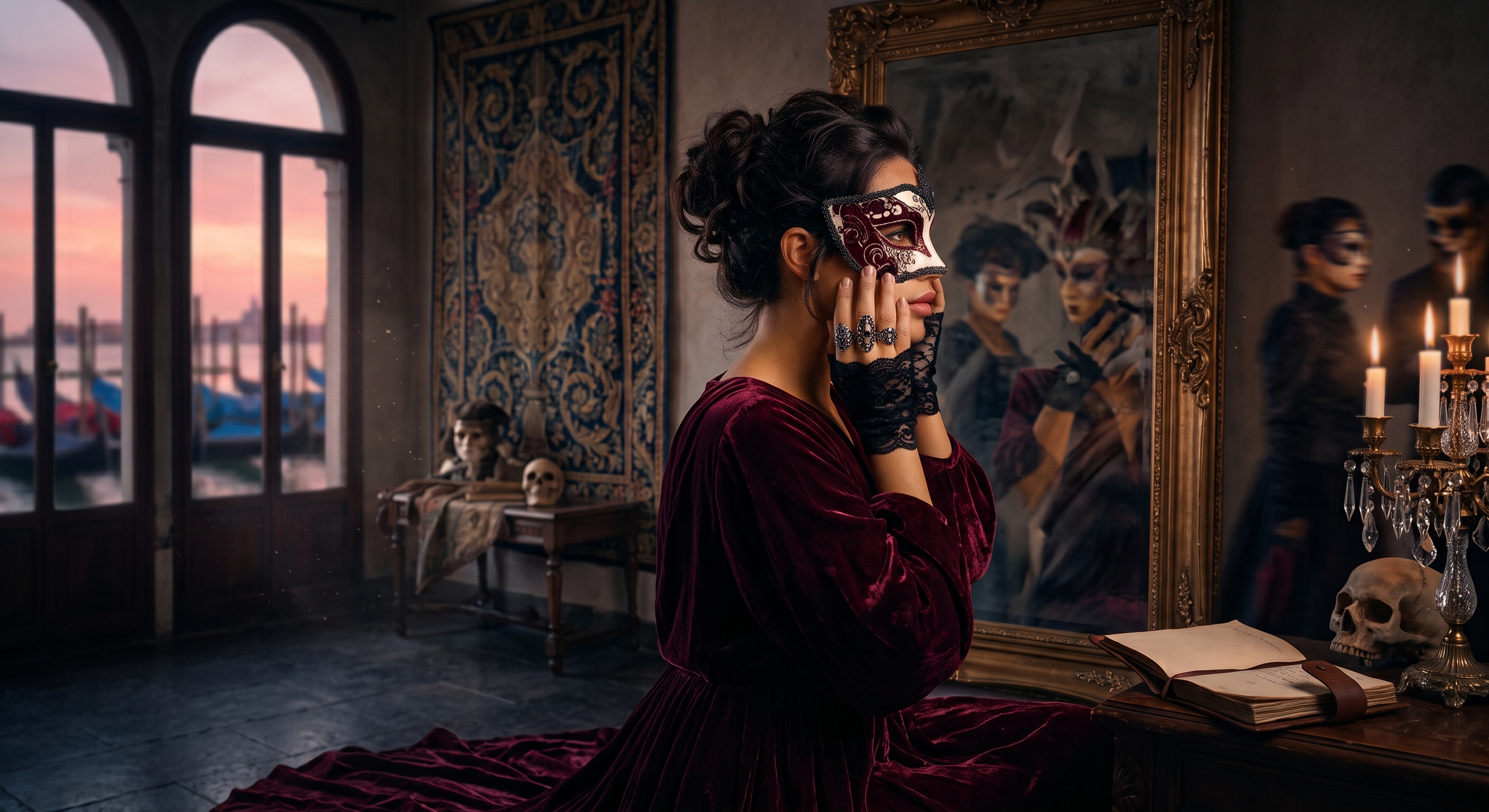
There is a psychological liberation that occurs behind a half-mask of lace, bone-white porcelain, and deep burgundy velvet. Stripped of facial expressions designed to appease or placate, the wearer becomes an enigma. Conversations grow sharper, intentions more transparent, and social hierarchies dissolve into the shadows of the ballroom. People no longer interact with your title, your reputation, or your everyday role; they interact solely with your aura, your voice, and your mind.
This principle extends far beyond physical costume balls. In our modern lives, maintaining an inner veil is essential for psychological survival. Not everyone deserves full access to who you are, what you think, or what you feel. Cultivating a private persona—a hidden self that remains untouched by public scrutiny—allows you to navigate the world with calculated poise. When you step behind the veil, you stop performing for an audience and start directing your own narrative. The mask does not conceal your true self; it gives your true self the courage to finally speak.